The final journey
Kashi Moksha Yatra for Malaysian families
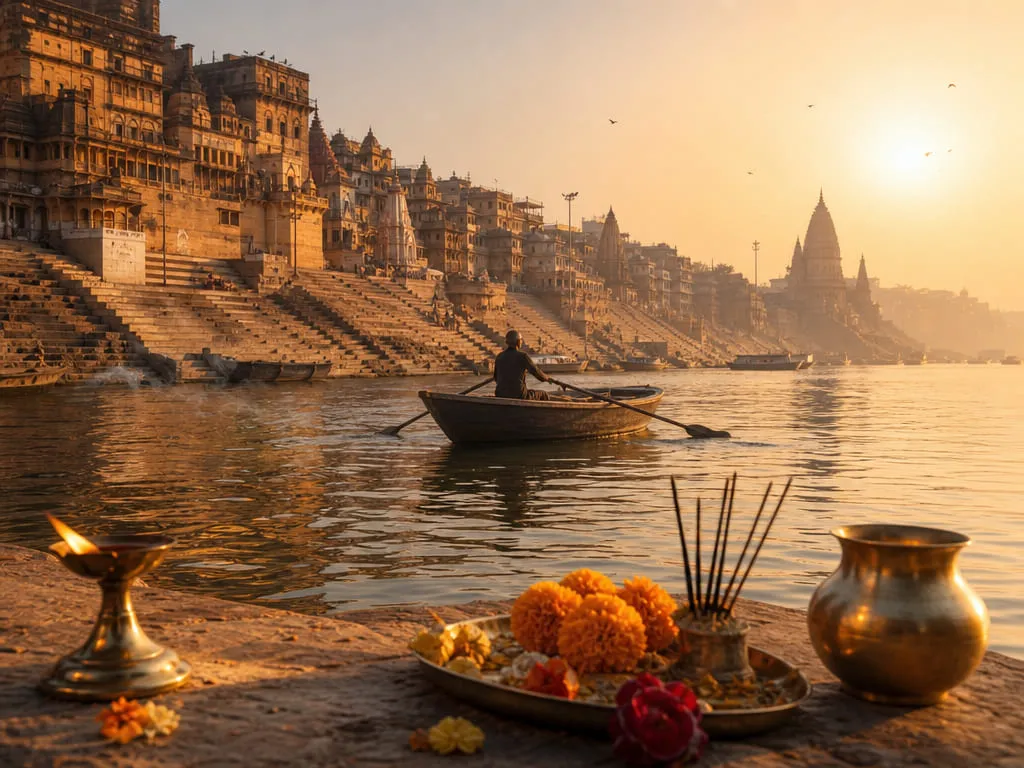
Kashi holds a particular place in the tradition as the city where the final journey is understood to reach its completion. We arrange the yatra from Malaysia.
What MIFA arranges
- Travel and itinerary coordination
- Accommodation and local transport
- Immersion of ashes in the Ganga
- Priests and boat arrangements at the ghats
- Shri Kashi Vishwanath temple visit
- Darshan coordination
- Ceremonial items sourced locally
- Family-group and elderly assistance
Where the rites are performed
The ghats
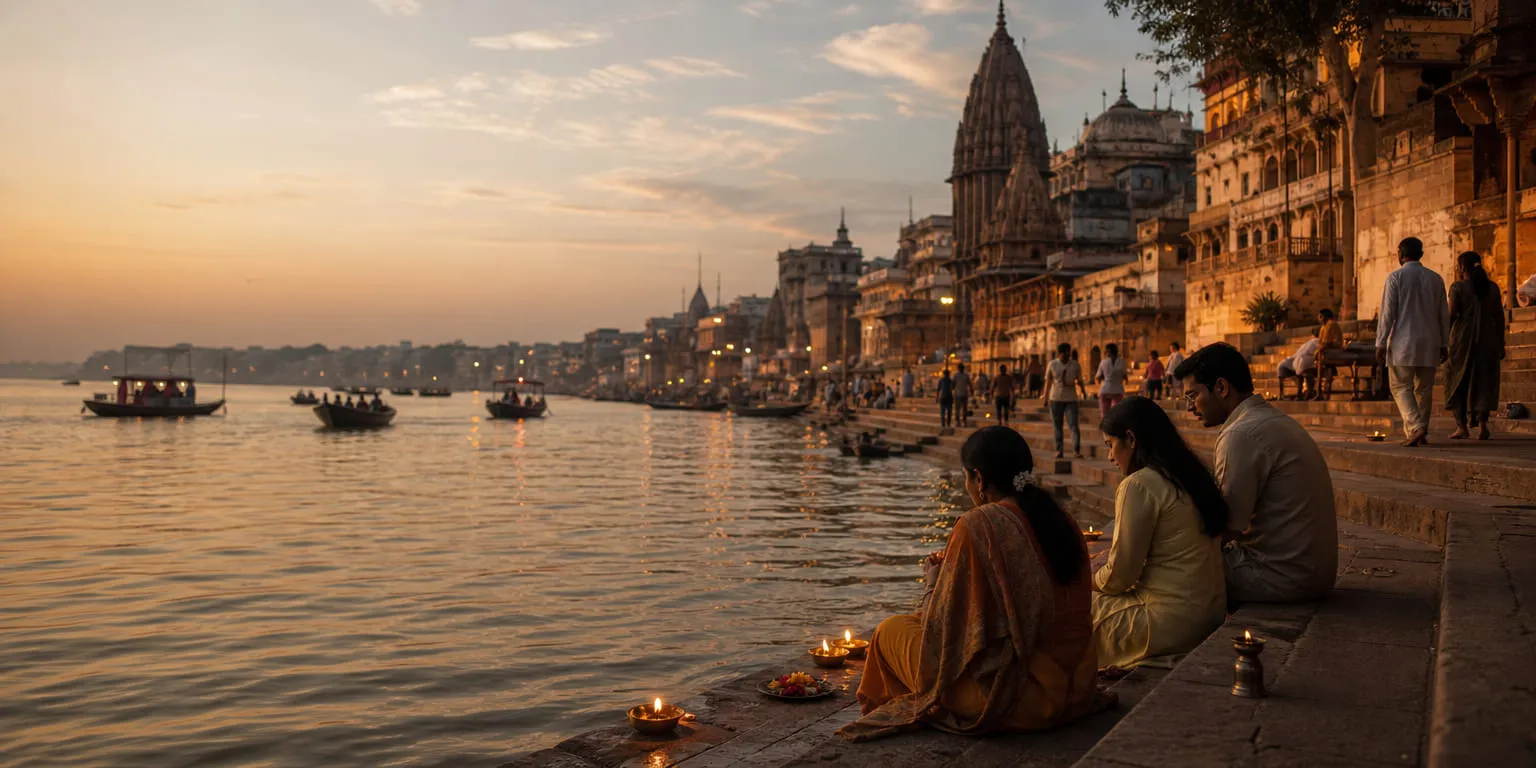
The stone stairways down to the Ganga, where the rites and the immersion are performed.
Kashi Vishwanath
The temple at the spiritual centre of the city, dedicated to Shiva.
The river
Boats are arranged for the immersion itself and for the ghats a family wishes to see from the water.
Temple services and boat access remain subject to local rules, river conditions and availability on the day.
Malaysian families who wish to immerse a loved one’s ashes in the Ganga, or to perform rites at the ghats, can arrange the journey through MIFA. So can families who simply want to make the journey while they still can.
What the yatra involves
Families usually also visit the temples, and most spend time at the ghats in the evening. There is no fixed itinerary in the tradition; what we arrange is built around what your family wants to do and how long you have.
Bringing ashes from Malaysia
This is the practical question every family has, and almost nobody answers it online.
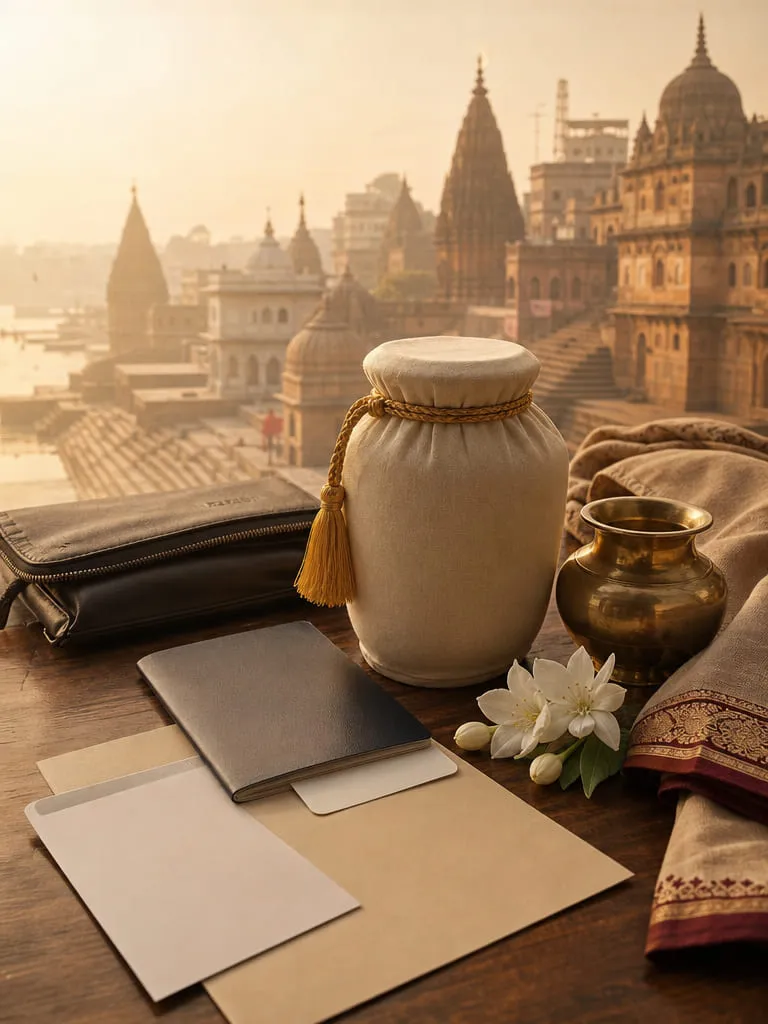
The ashes travel with you. They are carried rather than shipped, and the requirements are far lighter than for repatriating a body. In broad terms you will need documentation showing who the ashes belong to and that a cremation took place — the death certificate and the crematorium’s certificate — and the ashes need to be in a sealed, non-metallic container that can be screened.
Airlines and customs authorities set their own requirements and these do change. We prepare the documentation and confirm the current requirements with the airline before you fly, and we would ask you to reconfirm them again close to travel. This is not a page to rely on for a flight next week without speaking to us.
Combining Kashi with Gaya
The usual sequence is Gaya first, then Kashi. Families who do both generally allow additional days between the two rather than travelling on the same day, because the rites at Gaya run to their own schedule and a tight connection creates pressure exactly where it is least wanted.
The additional cost of adding Kashi to a Gaya journey is much smaller than the cost of a separate trip. If you are considering doing both at some point, do them together.
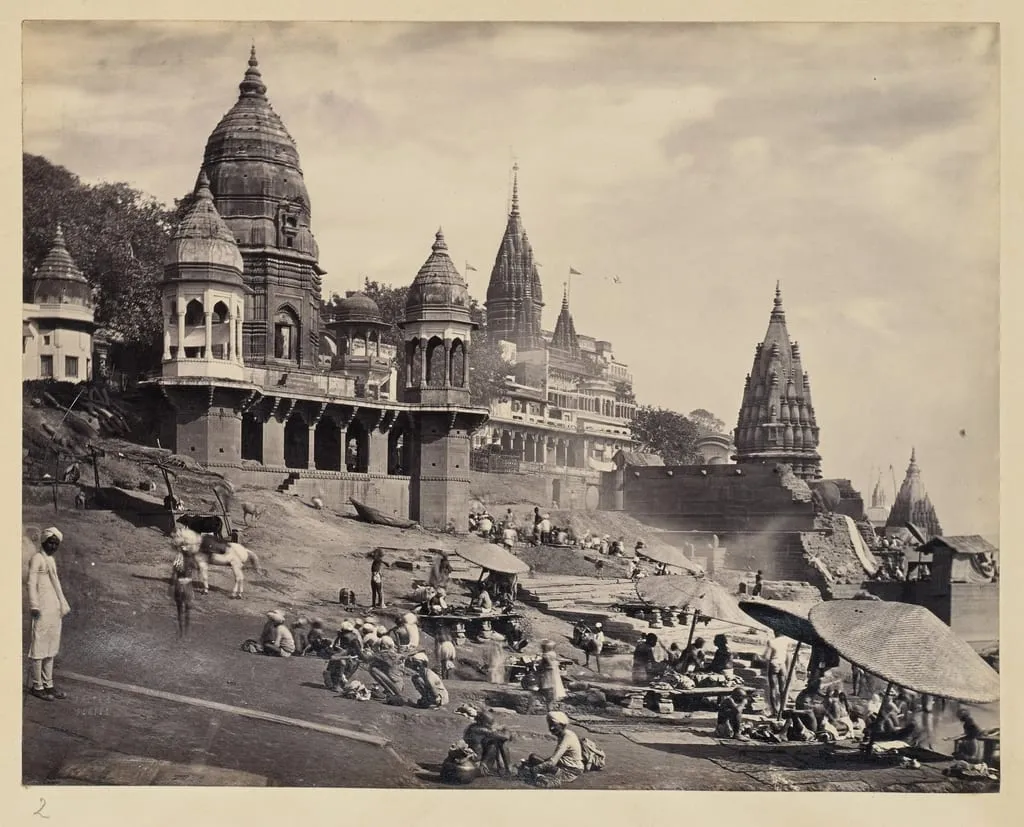
What the yatra involves
Varanasi is a city of ghats — the stone stairways running down to the Ganga — and almost everything the yatra involves happens on or near them.
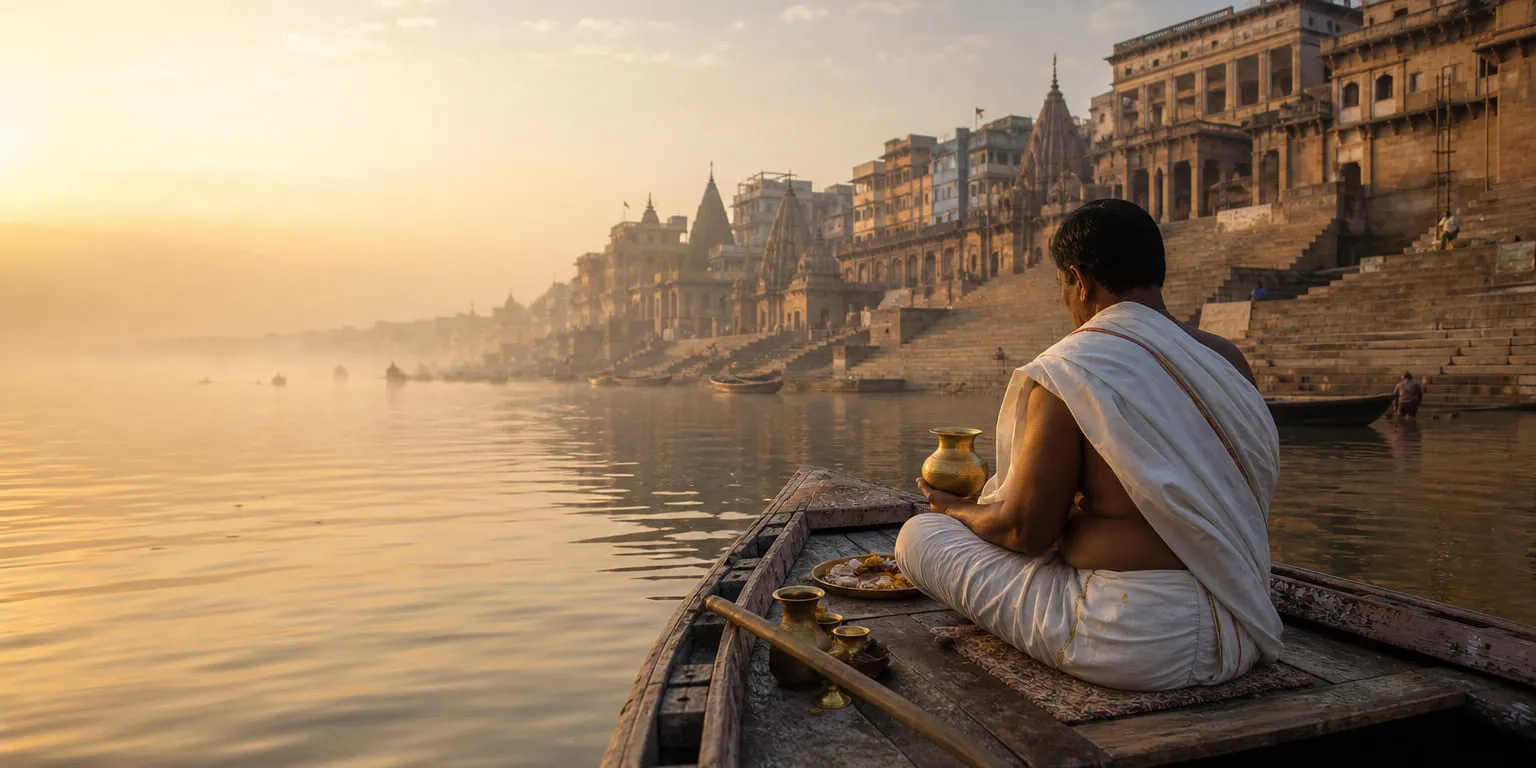
The immersion itself is performed from a boat on the river, generally in the early morning. A priest conducts the rites at the water's edge or on the boat, and the ashes are committed to the river.
How the journey is arranged
Priests at the ghats
Engaged in advance, with the ceremony confirmed before you arrive rather than agreed with whoever approaches you on the steps.
The boat
For the immersion itself, and for the ghats the family wishes to see from the water.
Ceremonial items
Sourced locally to what the rites require.
Travel and accommodation
Flights, transfers and rooms, chosen for how far they are from the ghats rather than for their star rating.
A coordinator
On group departures. Varanasi is overwhelming on a first visit, and having someone whose job is the logistics changes the trip entirely.
Frequently asked questions
Must the ashes be immersed within a certain time?
No. There is no deadline in the tradition and none in law. Families keep ashes for months and often for years, until someone is able to travel or until a date that matters to the family comes round. Taking your time is not a failure of duty.
Can we go without ashes, to perform rites only?
Yes. Families come to Kashi to perform rites for ancestors whose ashes were immersed long ago, or were never recovered, or were scattered elsewhere. The rites do not require the ashes to be present.
Is the journey suitable for elderly family members?
It can be, and many families travel with elderly relatives for whom this is the whole point of the trip. But the ghats are steps, there are a great many of them, and the boats are boarded from the water's edge. Tell us honestly about mobility when you enquire and we will plan around it rather than discovering the problem on the morning.
What is the best time of year to travel?
The cooler months are far easier for visitors from Malaysia, and the monsoon raises the river and can restrict boat access at the ghats. We will tell you what the conditions are likely to be for the dates you are considering.
Can Kashi be combined with Gaya?
Yes, and many families do both in a single journey. See the section below on sequence and the extra time it takes.
Before Kashi, Gaya
Many families perform the ancestral rites at Gaya first and complete the journey at Kashi. Doing both together adds less time than making two separate trips.
Ask about this journey
Tell us who the rites are for and roughly when you are thinking of travelling. You do not need to have decided anything — most families write before they know the dates, the cost or whether they can go at all.
If you would rather speak to someone, call+60 16-282 2168.Any hour, every day.